
House of Tokens
One token, one vote. Time-weighted staking multipliers (90d = 1.0x, 180d = 1.25x, 365d = 1.6x, 730d = 2.0x). Open to all AETHEL holders. Proposals require minimum stake threshold for submission.
Bi-cameral governance. Performance-based validator participation. Token utility tied to real protocol work.
Protocol changes, economic parameters, and ecosystem decisions flow through a structured governance system designed for long-term accountability. No single entity controls the network. Every change requires transparent deliberation, supermajority approval, and time-locked execution.

One token, one vote. Time-weighted staking multipliers (90d = 1.0x, 180d = 1.25x, 365d = 1.6x, 730d = 2.0x). Open to all AETHEL holders. Proposals require minimum stake threshold for submission.
100,000 AETHEL minimum stake (design target). Infrastructure veto power. Weighted by reliability score and uptime. Ensures operational expertise influences protocol decisions.
Supermajority required in both chambers independently.
All approved changes subject to timelock before execution.
Draft, review, voting, timelock, execution.
AETHEL is not a speculative asset. It is a protocol primitive with four defined utility roles: staking for consensus participation, fee settlement for network usage, governance voting for protocol evolution, and verified-compute payment for AI inference workloads.
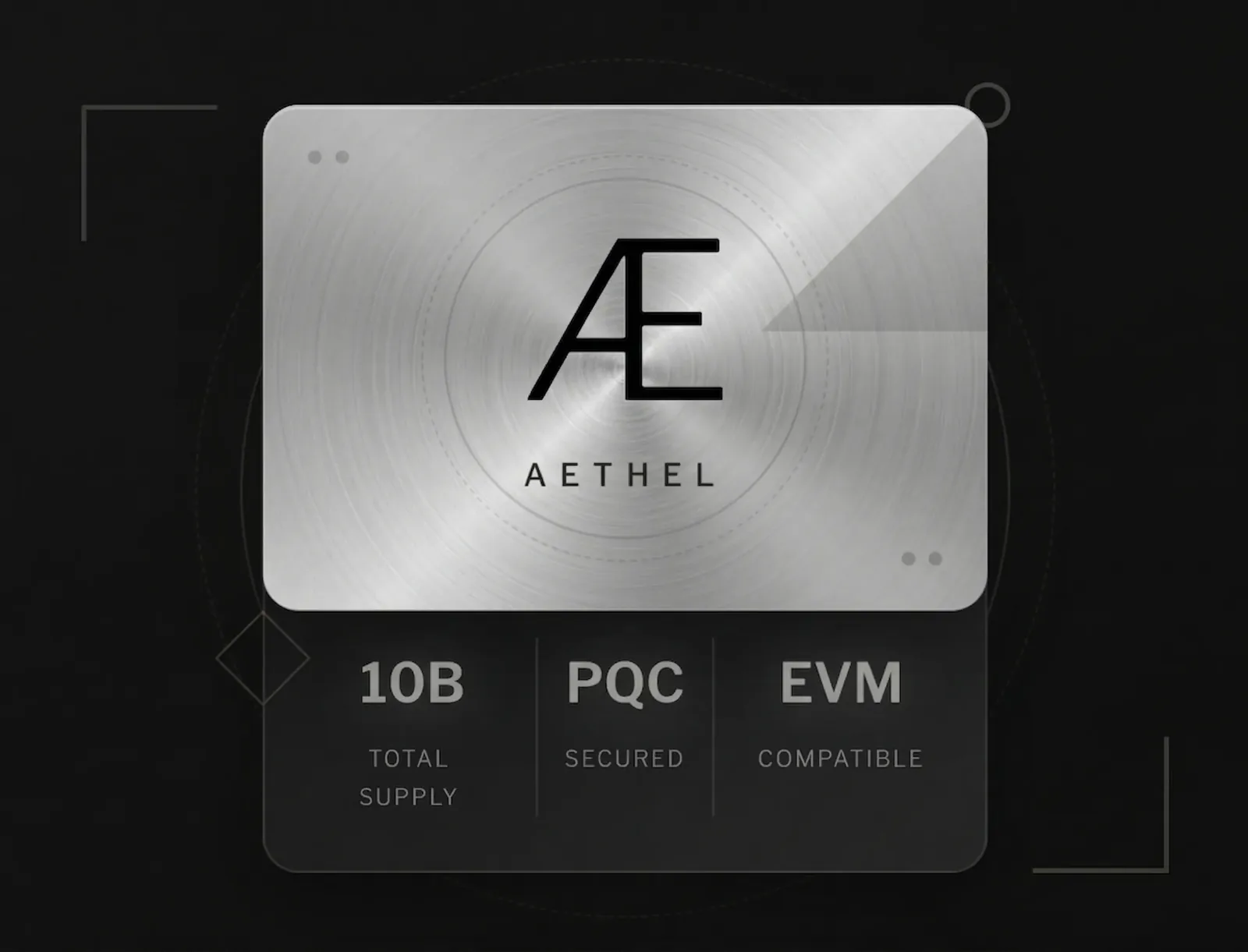
Fixed at genesis. No minting capability exists post-launch.
Deflationary by design. Quadratic fee burn during congestion.
Staking, fee settlement, governance participation, and verified-compute payment.
Supply, inflation policy, and utility roles are public and documented in the whitepaper. Allocation breakdown, launch float, and pricing remain governed and will be published only from the canonical token source pack after regulatory review.
Validators are not passive stakers. They operate infrastructure, execute AI inference, produce attestation quotes, and participate in governance. Admission is permissioned by hardware attestation and minimum stake requirements. Reliability scores determine governance weight.

TEE-capable hardware (SGX, Nitro, SEV-SNP), H100/MI300 GPU class, HSM key custody, 99.5% uptime target.
Proof-of-Useful-Work rewards, time-weighted staking multipliers, slashing for downtime and equivocation.
House of Validators membership, infrastructure veto power, reliability-weighted voting.
Initial protocol parameters set by founding team. Validator admission by invitation. Governance framework published.
Elected governance council. Community proposals enabled. Validator self-onboarding with hardware attestation.
Both chambers operational. All protocol changes require bi-cameral approval. Foundation transitions to maintenance role.
Explore the architecture, review the use cases, and connect with the team building the trust layer for AI-native systems.